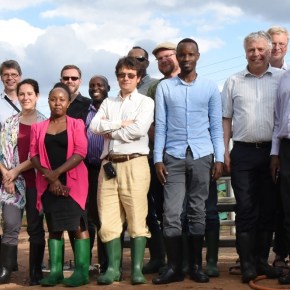
Farmer feedback workshops carried out in Nandi and Bomet counties in Kenya address various challenges faced by dairy smallholders. Based on results from previous data collected, training sessions on various aspects of dairy farming are delivered. Continue reading
Category Archives: Regions
Voices from the lab: Postdoctoral researcher shares her first field trip experience
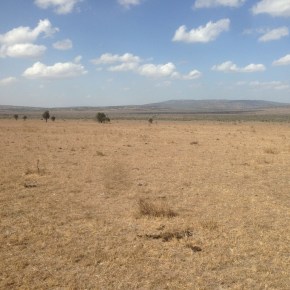
In this blog, one of the most recent Mazingira members, Sonja Leitner (Postdoctoral researcher, soil ecologist) who started with the team on 1st March 2018, shares an experience of her first field trip to Tanzania. From 25-30/03/2018, I joined Lutz Merbold and Phyllis Ndung’u on a field trip to Tanzania, where we visited different smallholder … Continue reading
Mazingira contributes to a global litter decomposition initiative
Plant litter represents a major carbon pool in the global carbon cycle and accurate estimates of litter decomposition resulting in a major flux of CO2 to the atmosphere will allow to better constrain carbon turnover in ecosystems. Therefore a global approach – the TeaComposition Initiative – was taken (more info here: TeaComposition). In brief, within … Continue reading
First Mazingira PhD student – Alice Onyango – successfully defended her thesis
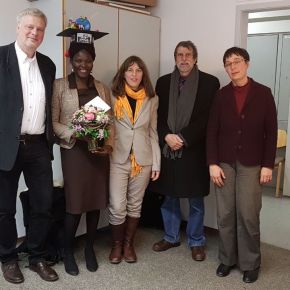
Congratulations Alice Onyango for successfully defending your PhD thesis on 18th January 2018 at University of Hohenheim, Germany. The Mazingira Team is very proud of you! Continue reading
Improved emission factors for enteric methane emissions from smallholder cattle in Western Kenya
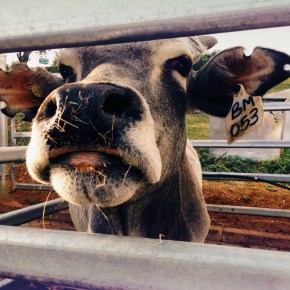
After having spent one year in the field and following approximately 1000 cattle from smallholder farmers, Alice Onyango, John Patrick Goopy and colleagues present improved emission factors for enteric methane emissions from smallholder cattle in Nyando Kenya. The study, recently published in Agricultural Systems not only provides TIER 2 greenhouse gas (GHG) emission estimates, but … Continue reading
Designing environmental research infrastructures in Africa
On 29 May to 1 June 2017, a team of scientists and other stakeholders in environmental research convened at the International Livestock Research Institute (ILRI) in Nairobi to discuss environmental research infrastructures in Africa. This was a kick-off meeting of the project —Supporting EU-African Cooperation on Research Infrastructures for Food Security and Greenhouse gas observations (SEACRIFOG) — funded by the European Union under the Horizon2020 program. Continue reading
Smallholder farmers’ training presents new livelihood horizons for a group of women in western Kenya
A group of women in western Kenya, upon completion of a training course in smallholder dairy production offered by the Mazingira Centre of the International Livestock Research Institute (ILRI), have adopted and commercialized preparation of home-made dairy meal for cattle. Continue reading
New research partnership seeks to explore the value of bioslurry
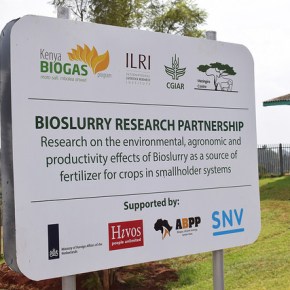
The Mazingira Centre of the International Livestock Research Institute (ILRI) has now entered into a research partnership with the Kenya Biogas Program (KBP) of Hivos to assess the environmental, agronomic and productivity effects of bioslurry as organic fertilizer for crops in smallholder systems. Continue reading
Voices from the lab: A research fellow shares her experience at the Mazingira Centre
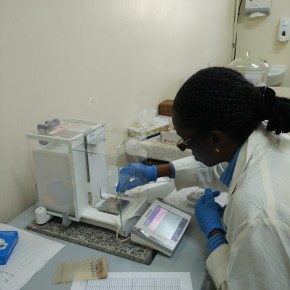
In this blog, one of the many researchers hosted by the Mazingira Centre under its objective of capacity development, Shade Akinsete from the Department of Environmental Health Sciences at the University of Ibadan in Nigeria, shares her experience as a Postdoctoral fellow (funded via Climate Impacts Research Capacity and Leadership Enhancement – CIRCLE – program) – at the Centre. Continue reading
Better information and inclusive participation key to enable African farmers cope with changing climate
The Africa Climate Smart Agriculture Alliance (ACSAA) held its second annual forum in Nairobi on 11–13 October 2016 which discussed Africa’s intended nationally determined contributions (INDCs). Under the Paris Agreement that seeks to reduce global greenhouse gas (GHG) emissions, countries publicly outlined the climate actions they intended to take, known as their INDCs. A parallel session by the CGIAR Research … Continue reading