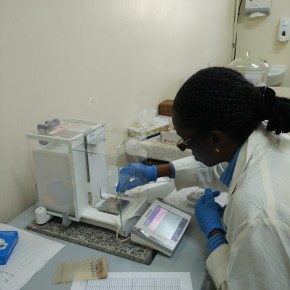
In this blog, one of the many researchers hosted by the Mazingira Centre under its objective of capacity development, Shade Akinsete from the Department of Environmental Health Sciences at the University of Ibadan in Nigeria, shares her experience as a Postdoctoral fellow (funded via Climate Impacts Research Capacity and Leadership Enhancement – CIRCLE – program) – at the Centre. Continue reading
Category Archives: Mazingira
Reliable and affordable methods for measurement of greenhouse gas emissions from agriculture now available
A new book, Methods for Measuring Greenhouse Gas Balances and Evaluating Mitigation Options in Smallholder Agriculture, explains how to design a measurement program; how to quantify stocks, stock changes and fluxes of the major GHG sources and sinks including; and how to use field measurements to estimate mitigation potential at larger scales, and assess trade-offs between climate change and development objectives. Continue reading
Better information and inclusive participation key to enable African farmers cope with changing climate
The Africa Climate Smart Agriculture Alliance (ACSAA) held its second annual forum in Nairobi on 11–13 October 2016 which discussed Africa’s intended nationally determined contributions (INDCs). Under the Paris Agreement that seeks to reduce global greenhouse gas (GHG) emissions, countries publicly outlined the climate actions they intended to take, known as their INDCs. A parallel session by the CGIAR Research … Continue reading
Improving productivity in Kenyan smallholder dairy systems through selective, intensive education and supported adoption
This poster, produced for the Tropentag 2016 conference, shares how the International Livestock Research Institute (ILRI) is working with NGOs, dairy cooperatives and GIZ, in the framework of a BMZ-funded project in western Kenya, to assess the potential of dairy farmers to implement new technologies that will further improve their operations. Continue reading
What are you feeding your cow? Dairy farmers trained on feeding and feed management
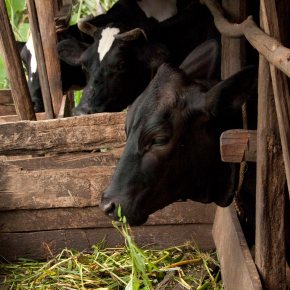
Feed constraints are among the key constraints that smallholder dairy farmers grapple with. Staff of the Mazingira Centre—an environmental research and educational facility of the Kenya-based International Livestock Research Institute (ILRI)—are helping to build the capacity of farmers to improve the productivity of their dairy cows. Continue reading
Greenhouse gas emissions from African cattle excreta less than estimated
Originally posted on ILRI Clippings:
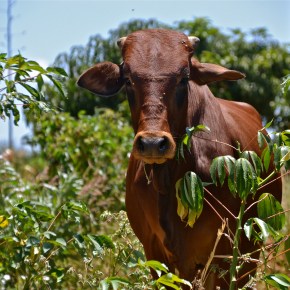
‘While greenhouse gas emissions of cattle excreta vary by diet, breed and other factors, measurements found that commonly used Tier 1 emission factors consistently overestimated actual emissions. Cattle keeping in Kenya (photo credit: CCAFS/C Schubert). Cattle keeping in South Africa (photo via StormSignal on Flickr). ‘Using the state-of-the-art laboratory established…
Fostering interest in climate change research: Mazingira centre hosts high school students
On 20 to 24 June 2016, the centre hosted three high school students from Braeburn HighSchool, Nairobi, to provide them with an exposure on what ‘understanding and managing the environmental footprint of livestock’ entails. Continue reading
Integrated manure management: What and why?
This poster, presented at the ongoing (26-30 June, 2016) 1st World Congress on Innovations for Livestock Development in Kenya, explains integrated manure management and why it is important in multifunctional livestock systems. Continue reading
Understanding and managing the environmental footprint of livestock in Africa
Agriculture, including livestock as well as crop production, makes up about a third (30%) of the global greenhouse gases (GHG) that are generated by human activity and warming our planet. About half of these agricultural emissions are caused by deforestation and soil carbon losses; the rest is largely generated by livestock (and some artificial fertilizer … Continue reading
Training and Education
Mazingira Centre hosts students with various levels of education to create awareness and learning on the process of greenhouse gas measurements and what this entails. Read more here Continue reading